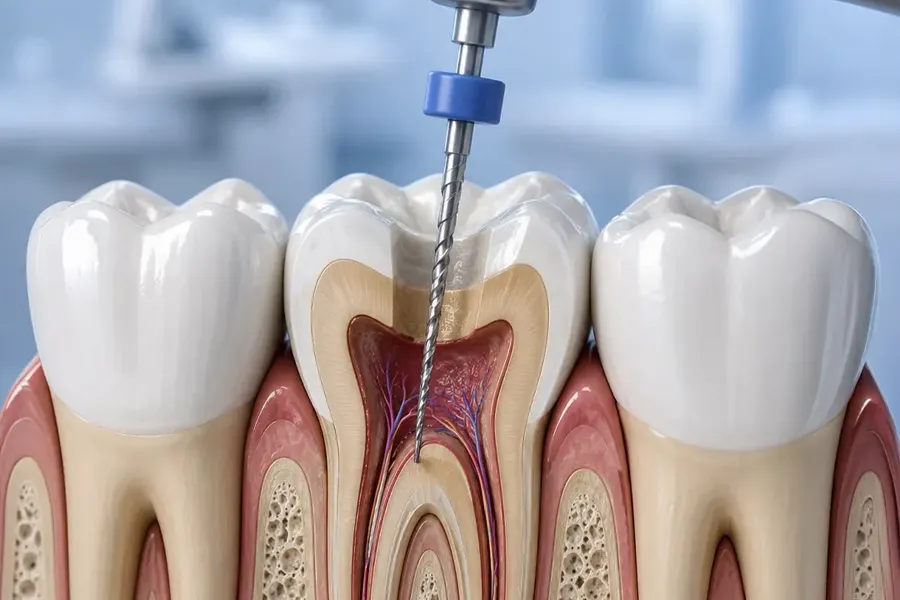
Root canal treatment is designed to treat the inside of a tooth and help preserve it. In some cases, however, a previously treated tooth may develop pain, swelling, or signs of infection months or even years later.
Yes. In selected cases, root canal treatment can be performed again. The procedure is called endodontic retreatment and may provide an opportunity to preserve a tooth that continues to have problems after previous treatment.
Not every tooth can or should be retreated. Before recommending retreatment, the tooth, previous root canal treatment, existing restoration, surrounding tissues, and relevant diagnostic images must be evaluated.

Patients often search online for “symptoms of a bad root canal” when a treated tooth becomes uncomfortable again. However, pain or infection after root canal treatment does not necessarily mean that the previous treatment was performed incorrectly.
There are multiple reasons a tooth can develop problems after treatment. Rather than assuming the previous procedure was inadequate, the most important step is to evaluate the tooth and identify what is currently causing the symptoms.
A problem in a previously treated tooth does not automatically mean that extraction is necessary. In some cases, retreatment can address the root canal system again and give the tooth another opportunity to be preserved. In other situations, different treatment options may need to be considered.
The decision depends on factors such as the condition of the roots, the amount of remaining tooth structure, the presence of cracks or fractures, the supporting tissues, and whether the tooth can be restored appropriately. The key question is: can this tooth still be predictably preserved and restored?
During retreatment, small details inside a previously treated tooth can be especially important. A dental operating microscope provides magnification and illumination that may help the endodontist identify structures that are difficult to see with the naked eye.
This can be particularly useful when locating canals, evaluating previous treatment, and working in more complex cases. Technology complements the endodontist’s experience and clinical judgment.
Every case is different, but retreatment generally involves accessing the tooth again and removing previous root canal filling materials as needed so the canals can be examined.
The canals are cleaned and disinfected again and, when conditions are appropriate, refilled and sealed.Depending on the complexity of the case, treatment may require one or more appointments.
After retreatment, the recommended final restoration is also important to protect the tooth.

Recurring pain or swelling does not automatically mean that the tooth must be lost. Before deciding on extraction, it is important to identify the cause and determine whether the tooth may still be preserved.